
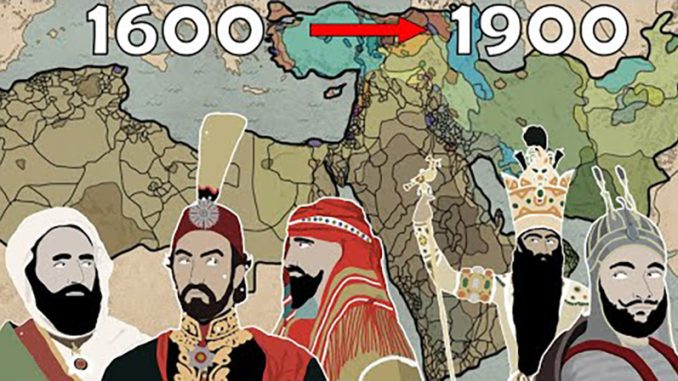
This project contributes to understanding the Middle East’s past and identifying the origins of its conflicts. Now, regarding the future, we also aim to promote the development of a more democratic Middle East. The democracy deficit has become a defining characteristic of the region’s Islamic ruling parties and regimes. Furthermore, the attempted “export of democracy” by the United States has failed mainly in both Iraq and, more broadly, Afghanistan. Therefore, it is essential to explore potential sources of democracy within the region itself. We want to shed light on the region’s secularisation and democratisation processes. By investigating the origins of democratic values within local societies, we can potentially extend these values to other communities throughout the region. To assess whether the existing successful models are too unique for others to adopt, we argue that many cultural and social structures in the Middle East share similarities, making it feasible to adapt the local experience to address the region’s deficits in democracy and liberty.
The assumption is that these movements possess a relative advantage over other Middle Eastern movements, particularly in terms of their approaches to political Islam, secularism, democracy, and authoritarianism. This comparative approach is a successful model for studying ways to improve less advantageous situations by contrasting them with those that have more advantages, rather than comparing them with an ideal situation. This approach is valid for developed countries as well. For instance, when comparing Britain’s welfare system, it would be more appropriate to compare it to France, Spain, or Italy rather than the Scandinavian countries, despite all being Western European nations with social democratic systems. On a broader scale, we can, for instance, compare the Kurdish experience with the situations of neighbouring countries in the Middle East, which offers some relative advantages and valuable lessons to learn and emulate.
Beyond the immediate region, there are other examples of comparative successes. For instance, 2024 marked the thirtieth anniversary of the end of apartheid in South Africa and the start of its democratic journey. This milestone prompted many to evaluate the results of this significant upheaval. Unfortunately, most reports and research have primarily highlighted issues such as corruption, resource mismanagement, disappointment, and a lack of public trust in post-apartheid governments. However, these analyses generally concluded that ‘Despite its flaws, South Africa’s democracy is stronger than that of its neighbors’. The Economist provided data and indicators suggesting that South Africa can still serve as a model for its regional counterparts. A similar argument can be made for Somaliland, the only democracy in the Horn of Africa, despite being an unrecognised state that declared independence from Somalia in 1991. There are notable similarities between Somaliland in Africa and Taiwan in East Asia in terms of their relative democratic settings compared to their respective motherlands. Returning to the Middle East, a parallel can be drawn between Kuwait and other Arab countries in the Persian Gulf. While all these states may initially be categorised as absolute monarchies, Kuwait shows significant signs of democracy, political engagement, press freedom, and legal opposition compared to its Arab neighbours, including the UAE, Qatar, and Saudi Arabia. Thus, if the world wishes to observe political developments in Africa and the Middle East, it must recognise the small but significant differences between South Africa, Somaliland, Taiwan, Kuwait, and their neighbouring countries, as understanding these nuances can encourage nations to learn from each other’s experiences.
One crucial lesson is that ideology matters. The Middle East, often referred to as the cradle of civilisation, remains a battleground for extreme ideologies, with many individuals sacrificing their lives for these beliefs. Destructive ideologies tend to resurface in the region. The tragic events of October 7th, involving Hamas and the irrational response from Israel, demonstrated the capacity for mass violence in the region. In many parts of the world, ideologies are no longer as prevalent as in the twentieth century. Nationalism, socialism, liberalism, and other ideologies did not fully achieve their ideal goals, but they have reached some level of satisfaction. For instance, citizens in Western countries generally enjoy relatively liberal social lives, with their national interests and security partially guaranteed, which fosters a sense of national pride. In contrast, in the Middle East, opposing ideologies have neither succeeded nor been defeated; they remain active and potent. Thus, the Middle East needs a new humanitarian ideology. Other nations could adopt a Kurdish model of secular, democratic, and leftist nationalism, wherein the coexistence of diverse ideas could pave the way for a new secular, democratic, leftist Middle East.
Reflecting on the past and the origins of conflict can provide insights into the future of the Middle East. Scholars like Huntington and Lewis often trace the roots of conflict back thousands of years, but their approaches fail to offer viable solutions for the future. Instead, they risk perpetuating cycles of violence and misunderstanding. This historical determinism is not limited to right-wing scholars but is also prevalent among politicians. For example, Donald Trump has infamously expressed disdain for “this F U C K I N G” region. At the same level, even democratic leaders like Barack Obama have referenced the origins of conflict as stemming from tribalism—indicating that ‘Middle East conflict dates back millennia’.
The third thought on the roots of conflict offers potential solutions. It advocates for a humanitarian ideology and a global trade framework that respects the region’s diversity. This approach suggests that the Middle East can follow a path similar to East Asia. For 25 years, between 1950 and 1975, East Asia experienced numerous wars, interventions, coups, and domestic crises, with tens of millions of humanitarian casualties. Yet today, it is a peaceful, prosperous, and integrated region. The Middle East can aspire to achieve the same level of development. The best advantage of the third school of thought about the roots of conflict is that it can offer a solution.