
For Kurdish Society, University of Sheffield, on;
Kurdistan National Flag Day and Peshmerga Day,
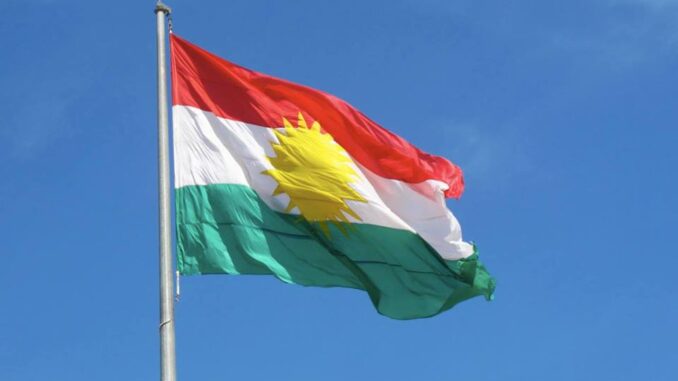
Tonight, we gathered here to celebrate Kurdish National Flag Day. Before proceeding with my speech , I must mention that the National Flag Day in Kurdistan, especially in Rojhelat is also named as the National Peshmerga Day. Indeed, the phenomenons of peshmerga, Kurdish freedom fighters, and our flag are intertwined with each other, both are among our national pride across Kurdistan.
I have no plan to discuss the philosophy of the colours of the Kurdish flag or the origins of its national day. All of you can use Google or ask ChatGPT to learn more about the Kurdish flag as one of the central symbols of Kurdistan’s national identity and collective memory. Instead, I want to talk about how our flag became the symbol of tolerance and pluralism, how the Kurds under this flag, have remained committed to democracy and secularism, and how we have avoided turning to political fundamentalism, radicalisation, and terrorism, unlike some parts of the Middle East.
Despite the majority of the Kurds being muslim and practising Islamic traditions in their daily life, they never allowed their religion to be involved in their politics, which is good for their religion as well. Instead, we fought against terrorism on behalf of other nations, and I can say on behalf of the rest of the world. Our peshmerga forces achieved these huge global and humanitarian achievements under our national flag. That is our source of honour, and we are proud of it.
While talking about our national flag, I must emphasise that even in the age of colonialism and occupation, our national flag was never raised in the lands of other people. We never occupied the land of other nations. We must be proud of that. In the age of territorial extensions, occupations and invasions, we never invaded other lands; at the same time, we always resisted being occupied by other nations and empires. They never did feel free to invade our people and we never were a soft target for our enemies.
And later, in the age of assimilation, when the great powers and dominant nations sought to assimilate other peoples, destroying their cultures, traditions, and languages, we neither allowed them to assimilate us nor did we allow ourselves to assimilate those non-Kurdish people who lived in our lands. We not only preserved our culture, language, and even our clothes, but also helped others keep their traditions and cultures alive.
Kurdistan has become the land of peaceful coexistence of all religious groups, ethnic minorities and refugees. During the ISIS war, hundreds of thousands of people living in different regions of Iraq and Syria fled to Iraqi Kurdistan and Rojava, especially women and vulnerable people. They found themselves at peace in Kurdistan until returning home. That is why humanitarian international organisations have praised Kurdish politics.
Then we can say Kurdistan has become a haven for refugees, minorities, women and children, and the Kurdish national flag has become a symbol of trust. I must emphasise that we are not proud of our flag because of its specific design, its colours, or its shining sun in the centre, but because of its reputation for peace, resistance, and acceptance.
A flag which never raised in any occupied land,
a flag never lowered in our land, never forgotten in our hearts and even in the hearts of those who stayed in Kurdistan for a while as a safe place to save the lives of their families and beloved. Then we, the Kurds are proud of the spirit of their national flag and the humanitarian history behind our flag.
Congratulations on the Kurdish national flag.
Congratulations on selecting a Kurdish political figure, Dr Barham, as the head of the United Nations High Commissioner for Refugees, and
Congratulations on being named the Zakho football club fans by FIFA as the best football fans in the world.
Enjoy THIS fantastic night.
Hemn Seyedi
17 December 2025
Be the first to comment